
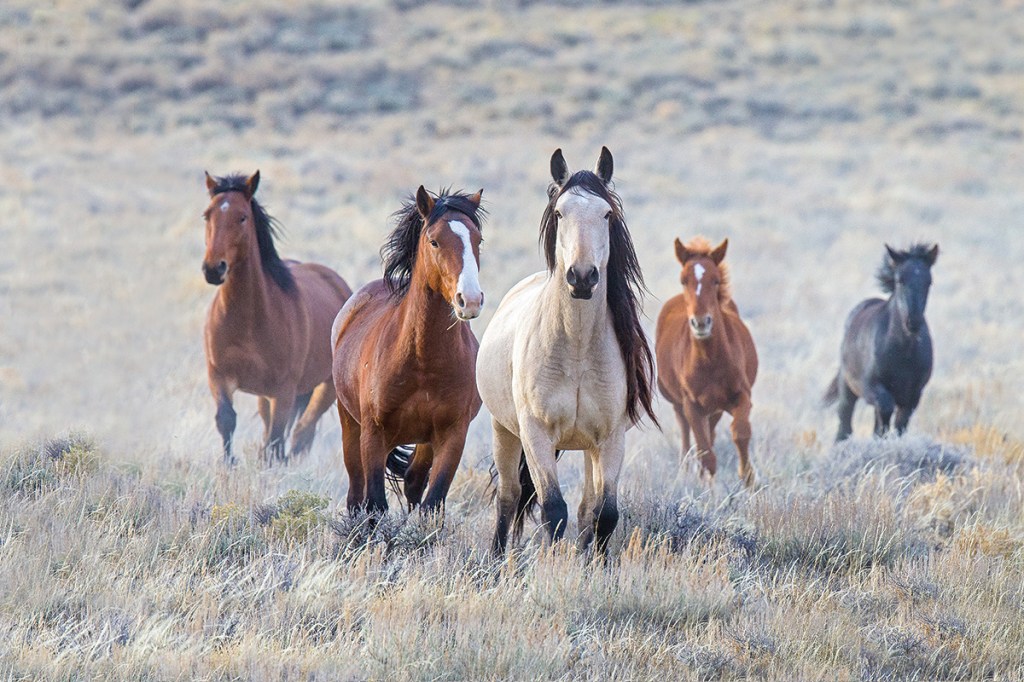
Clients who are skeptical of the need for routine equine dental care often remind us that there are no dentists for wild horses. It is true, but horses in captivity have humans to thank for their need for this additional care! In nature, horses graze continually throughout their day and they eat food sources that have many different textures and densities. They chew nearly constantly. And, the vast majority of the time, they eat from the ground which allows their mandible to shift forward appropriately and puts the left and right tooth arcades into the correct contact for even wear. These wild horses don’t have stall bars/rails to run their incisors across, fence boards to rub, hay blocks to gnaw, metal bits to clank, or horse feed to reduce their need to chew fully. Then of course there is captive breeding….horses with lousy tooth genetics in nature aren’t likely to live as long or reproduce as often….but our choices in breeding rarely look at teeth in the selection process when matching a great “pair”. Some dental conditions do have a genetic basis and could be decreased with some research in the selection.
No horse owner tries to cause dental issues….they are just doing all the things that they believe makes for a great equine life! But there are some simple changes a horse owner or barn owner can make that really benefit the overall condition of their horse’s teeth!
- Feed horses from the ground as much as possible, both horse feed and forages (this position allows their lower jaw to drop forward and aligns their molars properly to promote even contact and wear during mastication)
- Limit use of feeding methods that make it necessary for a horse to gnaw for its food such as compressed hay blocks, tightly packed hay bags, grated feeders (these can cause damage the tooth enamel, gingival recession, and gum tissue injury)
- Plan feeding to provide as much “chewing” time as possible (spread throughout the day)
- Try to provide as much of the horse’s diet as possible in forages (hays and grasses need far more mastication than horse feed and aid in proper wearing of dental surfaces)
- And of course, routine dental care! Once a horse’s teeth no longer align and form some surface abnormalities (“hooks, ramps, points, uneven incisors” etc), they will not self correct. Those elevations further disrupt the chewing pattern…..the horse won’t reduce its own “hook” by chewing on top of it! The “hook” gets bigger from lack of wear, the jaw gets shifted more out of alignment during the chewing cycle….and so on and so on! They aren’t difficult fixes if not left a long time, just routine maintenance! See you in the dental trailer!

